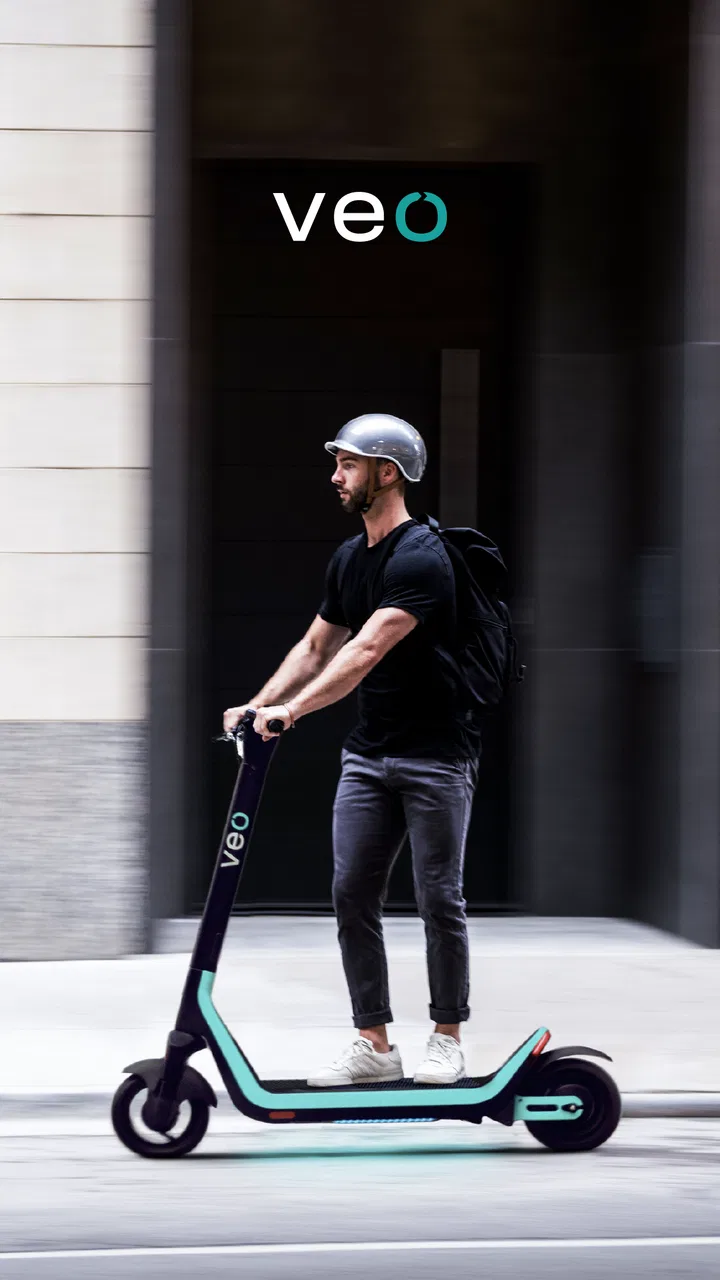
Veo - Shared Electric Vehicles
- 4.7
- Rating
- 1.00M
- Installs
- Free
- Price

 Analysis by App-foxy
Veo - Shared Electric Vehicles is the kind of travel app I find most useful when a short trip is too far to walk but too close to justify a car, taxi, or full public-transport journey. My overall impression is positive: it makes shared and personal electric vehicles feel approachable, while keeping the basic rental process focused on getting moving rather than learning a complicated system. The important qualification is that its usefulness depends heavily on whether Veo vehicles are available where you need them. When they are, the app can turn an awkward local trip into a simple ride; when they are not, it cannot replace a broader transit planner or a dependable taxi service.
Developed by VeoRide, this free Travel & Local app is aimed at everyday movement rather than sightseeing alone. I see it as a practical last-mile tool for commuting, reaching a station, crossing a large campus, visiting nearby businesses, or handling an errand without taking a private car. Its store average is 4.7 from around 15K ratings, and it has passed one million installs, which suggests that the concept has found a substantial audience. Those figures are encouraging, but they do not remove the central question every potential rider should ask: is the local vehicle network convenient for my regular routes?
How Veo fits into a real trip
The app makes the most sense when I treat it as one part of a journey. For example, I might take a train or bus toward the edge of town, open Veo near the stop, and use an available electric vehicle for the remaining distance. That is a different role from a navigation app, which helps me plan a route, or a ride-hailing service, which sends a driver to collect me. Veo gives me more independence than a car service, but it also asks me to find a vehicle and handle the ride myself.
You May Also Like

 Blood Strike: 2.5 Anniversary
Blood Strike’s Loadouts Turn Every Drop Into a Tactical Gamble
A close look at Blood Strike’s custom loadouts: how fast access to signature weapons reshapes its battle royale rhythm, rewards preparation, and narrows the gap between fights.

 Pandora - Music & Podcasts
Pandora’s Music Is Easy to Start, but Harder to Recover
Pandora’s strength is its low-effort path from a seed to a station. Its weak spot is how much confidence it asks you to place in connection, setup, and quiet recovery.

 8 Ball Pool
 Is Built on Rivalries, Rematches, and Routine
A close look at the rivalries, rematches, shared routines, and unanswered safety questions that turn a quick pool match into a persistent mobile community.

 Samsung Music
’s Quiet Strength Is Playing What You Already Own
Its reach comes less from spectacle than from dependable access to a personal library. That simplicity is both the app’s strongest retention engine and its ceiling.

 AccuWeather: Weather Radar
AccuWeather Review: A Quick, Clear Forecast for Everyday Decisions
For everyday plans, the best forecast is the one you can understand quickly. AccuWeather makes rain timing, radar, and local conditions easy to act on, with a few trade-offs.

 Hill Climb Racing
Why Hill Climb Racing Still Turns Crashes Into One More Run
A tiny car, a bumpy hill and one more upgrade: Hill Climb Racing keeps resurfacing because its simple chaos makes every near-miss feel personal.
More From Our News Desk



That distinction matters in daily use. If I am leaving work for a nearby appointment, I can check the app before walking out, see whether a suitable vehicle is available, and decide whether the ride is worth taking. If the nearest option is inconveniently placed or the destination is outside the practical service area, I can switch plans before spending time walking toward it. I appreciate that this encourages a quick decision instead of committing me to a long booking process.
The experience is particularly appealing for short urban journeys where driving feels excessive. A personal vehicle can be expensive to own for occasional use, while a taxi can feel disproportionate for a brief hop. A shared electric vehicle sits between those choices. I am still responsible for my route and riding, but I avoid parking a car, waiting for a driver, or carrying a vehicle with me all day.
One useful habit is to check the app at both ends of a trip, not just at departure. Finding a vehicle near home does not guarantee that I will have an equally convenient way to finish the return journey. This is one of the less obvious trade-offs of shared mobility: the first leg may be easy while the return depends on local availability. Planning the whole outing around likely vehicle access makes Veo far more reliable than opening it only after I am already in a hurry.
A simple workflow that reduces friction
My preferred workflow is deliberately short. I open the app before leaving, inspect the nearby choices, consider the destination, and then decide whether the vehicle is genuinely more convenient than walking or public transport. I avoid treating the map as a promise that every visible option will remain available until I reach it. Shared vehicles can be taken by someone else, so a little flexibility is sensible when timing matters.
I also think about the final part of the ride before starting. If I am going to a busy shopping street, a workplace, or a transit hub, I want to know where ending the trip will be practical and permitted. The best result is not simply reaching the destination quickly; it is finishing without creating a parking problem or an unnecessary walk. This mindset helps me use the app as a complete travel decision rather than as a button for unlocking a vehicle.
For a regular commute, I would test Veo on several different days before making it part of my routine. Morning availability may look different from evening availability, and a route that works well on a quiet day may be less comfortable when I am carrying a bag or dealing with poor weather. That trial period is important because the app’s value comes from local consistency, not merely from the presence of an attractive map at one moment.
Where the electric-vehicle approach works best
Veo is strongest for trips with a clear beginning and end, especially when I need more speed than walking but do not need a full-sized vehicle. It can be a good fit for moving between nearby neighborhoods, reaching a meeting after public transport, or covering a distance that would make walking inconvenient. It also suits people who prefer not to maintain, charge, store, or insure their own personal vehicle.
The environmental angle is appealing, but I would not use it as the only reason to choose the app. The practical benefit is more immediate: a smaller electric vehicle can make local travel easier while reducing dependence on a private car. The right comparison is not always “electric vehicle versus walking.” Sometimes it is “electric vehicle versus a car trip that would otherwise happen because walking takes too long.” In that situation, the service has a more convincing everyday role.
I find the shared and personal vehicle concept interesting because it recognizes that riders have different preferences. Some people want the convenience of a shared option, while others are more comfortable using a vehicle associated with their own account or routine. I would still choose based on what is available and suitable at the moment rather than assuming one mode is automatically better. The app’s flexibility is useful, but it does not eliminate the need to judge the trip for myself.
The weakness I would take seriously
The biggest limitation is network dependence. Veo cannot be evaluated like a standalone map or note-taking app that works almost anywhere. Its usefulness is tied to the places where its vehicles operate and to the availability around my actual route. Someone living outside a service area, traveling to an unfamiliar city, or needing guaranteed transport may find the app disappointing even if the software itself feels polished.
That limitation becomes more noticeable when I have a strict arrival time. If I am heading to an interview, a flight, a medical appointment, or an event with a fixed start, I would not make a shared vehicle my only plan unless I already knew the local availability and route well. A taxi, private car, or established public-transport connection may be the better choice when reliability matters more than flexibility.
There is also a mental cost that traditional alternatives do not always have. With a taxi, I request a pickup; with a bus, I follow a timetable; with my own bicycle or car, I know where the vehicle is. With Veo, I need to think about discovery, access, the ride itself, and the end of the trip. That process is still simple compared with owning a vehicle, but it is not completely effortless. The app reduces friction; it does not make urban transport frictionless.
Weather and luggage are practical considerations too. A short ride that feels ideal on a clear day may be less attractive in rain, cold, or heavy traffic. A backpack may be manageable, while bulky shopping or work equipment can make a compact electric vehicle a poor choice. I would also avoid selecting it merely because it appears faster on the map if the route feels uncomfortable or unfamiliar. Convenience should include confidence, not just travel time.
Who should use it, and who should skip it
I would recommend Veo to city residents, students, commuters, and visitors who regularly make short trips and are comfortable checking availability before setting off. It is especially useful for people combining public transport with a final local connection. If I wanted to reduce car use without buying a bicycle or maintaining another personal vehicle, this would be a sensible app to try.
It is also a good option for someone who values spontaneous movement. I can decide to ride after seeing what is nearby instead of arranging transport far in advance. That works well for errands and casual plans, where a little uncertainty is acceptable. The free price makes trying it low-risk, although the real cost of a journey should still be considered in the app before I rely on it frequently.
I would be more cautious recommending it to people who need door-to-door service, have limited confidence riding an electric vehicle, travel with large luggage, or require a guaranteed pickup. Families should also think carefully about whether the available vehicle type and local riding rules suit everyone in the group rather than assuming one account solves every travel need. For those situations, a conventional car service, public transport, or a private vehicle may be more appropriate.
Travelers should remember that a familiar app does not mean a familiar city. Before using Veo somewhere new, I would inspect the local map, understand where the service appears to operate, and leave extra time for finding a suitable vehicle. That small preparation answers an important practical question: can the app support this particular trip, rather than merely being installed on my phone?
What the app offers beyond a basic rental button
The most valuable feature, in my view, is the way the app supports a decision before the ride begins. I can use it to judge whether a vehicle is close enough, whether the journey makes sense, and whether the final stop will be convenient. That planning role is easy to overlook because the service is often described simply as a way to ride, but it is where I get much of the everyday value.
I also like the possibility of building a repeatable routine around it without owning equipment. For a commute, I can identify the parts of the route where Veo is genuinely better than walking and use it only there. Perhaps the best use is not replacing an entire journey, but removing one particularly awkward segment. This selective approach saves me from forcing the app into trips where public transport or walking already works better.
Another practical insight is to keep a fallback route ready rather than assuming the nearest vehicle will solve everything. I might know the next bus, a walking shortcut, or a taxi option before I unlock anything. That does not undermine the service; it makes the service safer to use when timing or availability changes. Shared transport works best when I treat flexibility as part of the design, not as a sign that the app has failed.
The app is free and rated for Everyone, which makes it approachable for a broad audience. It was released on October 25, 2017, and the current version is 4.59.1, with Android support starting at version 7.0. Those details make it accessible to many Android users, though I would still keep the app updated and check that my phone meets the operating-system requirement before planning a trip around it.
How it compares with familiar alternatives
Compared with walking, Veo wins when distance or time is the main obstacle, but walking remains simpler, cheaper in practical terms, and independent of vehicle availability. Compared with buses and trains, Veo offers more direct movement and avoids waiting for a fixed route, while public transport is usually better for longer distances, bad weather, or trips where I want to relax rather than ride myself.
Compared with a taxi or ride-hailing service, Veo gives me more control over departure and can be a better match for a short trip. The trade-off is that no driver is coming to me, and the vehicle may not be exactly where I want it. Compared with owning a bicycle, scooter, or car, it removes storage and maintenance responsibilities but gives up guaranteed access. In other words, Veo is most convincing as a complement to those options, not as a universal replacement for all of them.
That comparison also explains why I would not install it expecting a complete travel planner. Its strength is access to Veo’s electric-vehicle network, not the broadest possible transport coverage. I would keep a general maps or transit app available for route context, especially when a trip involves several modes. Veo handles one valuable part of the journey, but it does not need to handle every part to be worthwhile.
My final recommendation
After using Veo as a local-mobility tool, I see a clear thesis: it is a convenient way to bridge short urban distances when a nearby vehicle is available and I am willing to manage the ride myself. The combination of shared and personal electric vehicles gives it a useful place between walking, public transport, and car-based travel. The interface’s real strength is not flashy complexity; it is helping me decide quickly whether a ride fits the trip in front of me.
I would recommend downloading it if you live, work, study, or spend time in an area served by VeoRide and often face awkward last-mile journeys. Start with low-pressure errands, learn how availability behaves along your routes, and keep a backup for important appointments. I would skip it if you need guaranteed door-to-door transport or rarely encounter a Veo vehicle where you travel.
For me, the app earns its place as a practical travel companion rather than a complete transportation solution. It is free to try, has broad age accessibility, and has built a strong user response with a 4.7 average and more than one million installs. My recommendation is simple: use Veo when local availability turns a short trip into an easy ride, but never confuse convenience with a guarantee.
FAQs for Veo - Shared Electric Vehicles
01What is Veo and how does it work?
Veo is a shared electric vehicle service that allows users to rent e-scooters and e-bikes for short trips in urban areas. Users can locate and unlock vehicles using the Veo app, which provides a map of available rides nearby. After usage, the vehicles should be parked in designated areas to ensure they are easily accessible for the next user.
02How much does it cost to use Veo's services?
The cost of using Veo's services varies by location and vehicle type. Typically, there is an initial unlocking fee followed by a per-minute charge. Special promotions, passes, or subscription options may also be available within the app, offering frequent users a more cost-effective way to ride.
03Is Veo available in my city?
Veo is continuously expanding its service areas, and availability can vary. Users can check the app or the official Veo website to see a list of supported cities. Additionally, the app will display available vehicles when you are within a service area, making it easy to determine if Veo operates in your location.
04What safety measures should I take while using Veo vehicles?
Safety is a top priority when using Veo vehicles. Riders should wear helmets, follow local traffic laws, and avoid riding on sidewalks unless permitted. It is also important to be aware of your surroundings and to ride at a safe speed. The app provides safety tips and guidelines to ensure a secure riding experience.
05How do I report a problem with a Veo vehicle?
If you encounter an issue with a Veo vehicle, you can report it directly through the app. There is a feature to report problems such as mechanical issues or inappropriate parking. Providing details and, if possible, including photos can help Veo's support team quickly address and resolve the issue.
Pros
- User-friendly interface makes navigation easy.
- Wide availability in major city locations.
- Eco-friendly transport option reduces carbon footprint.
- Affordable pricing compared to traditional taxis.
- Convenient for short trips and errands.
Cons
- Limited service in smaller towns and rural areas.
- Requires internet connection for operation.
- Occasional issues with app stability reported.
- Dependence on battery levels of the vehicle.
- Must adhere to designated parking zones.

Veo - Shared Electric Vehicles
Gallery